Wednesday, June 20, 2012

June is Cataract Awareness Month


Hello everyone,

June is Cataract Awareness Month. There are many different types of cataracts, which can arise from many contributing factors: trauma, long term steroid use, high-risk medications and health conditions, such as diabetes. However, the most common cataracts are due to increasing age.

Cataracts are a very common eye condition that becomes even more likely to occur as an individual gets older. People are living longer lives these days, so cataracts are becoming more prevalent.

According to the World Health Organization, cataracts are responsible for 51% of world blindness, affecting about 20 million people. In 2008, the National Eye Institute and Prevent Blindness America said in the United States, nearly 22 million Americans age 40 and older have cataracts. At age 80, more than half of those Americans have cataracts.
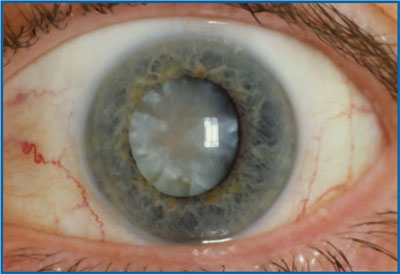
Don't let cataracts get this bad. This is a fairly dense cataract.

A cataract is a clouding of the eye’s natural lens. At birth, the lens is crystal clear. As one gets older, the lens becomes cloudier, and visual complaints of decreased vision and glare become more apparent.

Cataracts can be prevented to some degree. The Mayo Clinic suggests having regular eye exams, as directed by your eye doctor, which can help detect cataracts and other eye diseases at their earliest stages. Smoking has been linked to cataract progression. The cessation of smoking, as well as maintaining a healthy weight and eating a healthy diet, can help reduce the risk of cataract progression.

Probably the easiest thing a person can do to help prevent cataracts is to wear UV-blocking sunglasses. UV radiation has been linked to the development of certain types of cataracts, as well as macular degeneration. Wearing sunglasses should start at a young age, because approximately 50% of our lifetime UV exposure will occur before the age of 18.

The progression of a cataract is typically a slow, gradual change. Some patients are very susceptible to changes in their vision. However, many patients don’t realize there is a vision problem until they are evaluated at an eye exam. Most likely, this is because a patient is always using both eyes together, and typically do not notice vision changes if only one eye is getting worse. When the quality of life is affected by poor vision, and that vision cannot be improved by updating the patient’s eyeglasses prescription, then cataract surgery is warranted.

 No cataract on the left. Cataract on the right scattering light,
causing glare, light sensitivity and blurred vision.

I have seen patients wait a bit too long for fear of cataract surgery. Their vision progressively gets worse despite recommendations to have the surgery performed. There are risks to any surgery, but the risks of major complications of cataract surgery in the hands of a skilled surgeon are very low.

Some of those risks include increased pressure in the eyes, inflammation, and infection. However, any patient undergoing cataract surgery is monitored closely in the post-operative period by the surgeon or co-managing optometrist, and given anti-inflammatory and anti-bacterial eye-drops to facilitate the healing process.

Usually when a patient has surgery in one eye, their first question is, "How soon can I get the other eye done?" When the surgeon removes the cloudy cataract and replaces it with a clear intra-ocular lens, the reported brightness of colors and image quality by the patient is astounding.

In individuals over the age of 60, the American Optometric Association recommends an annual eye exam, including dilation of the eyes, to evaluate the vision and to check for cataracts and other ocular conditions. Since cataracts can occur at any age, it's important to get regular eye exams for all individuals young and old, even if one's vision seems adequate.

Sincerely,
Dr. Weaver

Tuesday, June 5, 2012

Glasses that help you lose weight?

Hello everyone,

I must admit that I constantly check the Internet for all of my news gathering. I can't remember the last time I've watched a televised news program. As for newspapers, I read the Sunday edition of the Reading Eagle...and when I mean "read," I mean skim over the titles and reading only one or two articles that interest me. The Internet provides me with news instantly, rather than learning about it on TV or print many hours later.

Well, I read an article on Yahoo about something called Diet Glasses. From The Herald Sun, "Tokyo University professor Michitaka Hirose (R) and his team developed a camera-equipped special goggle, which makes cookies bigger to help users' diet at his laboratory in Tokyo on June 2, 2012. Hirose conducted an experiment, asking examinees to eat as many cookies as they want with and without the glasses. The results showed they ate 9.3 percent less on average with the goggle showing cookies 1.5 times bigger than they actually are and ate 15 percent more with cookies looking two-thirds of their real size."

This Oreo looks humongous! Chomp, chomp, chomp, chomp...can I have another, please?


I had just written a blog post about the Project Glass by Google with augmented reality glasses to add information to one's perception. However, these glasses designed by Hirose augments reality by "fooling" one's perception. The computer attached to the special goggles keeps the individual's hand size the same, while increasing or decreasing the size of the object they are picking up.


Hirose is interested in the study of virtual reality, where reality is perceived by the mind. His science team created a device that fooled the brain by changing the image one would normally see. The device is not for commercial use, but they are considering using such a device to help individuals lose weight my changing their perception: making the food look bigger so that the individual would eat less without the use of diet-modulating drugs.
Red pill, blue pill...you mean I'm a human battery?


It's like an optical illusion. For example, when a full moon is very low on the horizon, it also looks humongous! But try taking a picture of the moon when it's at that low position on the horizon. The moon isn't actually bigger, it's the same size as when it's high in the sky...the photograph will reveal this. Check out Wikipedia for more information on the Moon Illusion.

So, what's next for augmented reality glasses? Project Glass, Hirose's Oreos, and then what? I hope the major food manufacturers don't try to get all of us to wear the Hirose goggles so that they can make their food in smaller portion sizes. I'm already getting only 10 chips in a large bag of Lay's in the first place.

And Nabisco, don't even think about making the Oreo's smaller...bigger would be okay, though. Maybe moon-sized?


Take care,
Dr. Weaver

Wednesday, May 23, 2012

Oogle with Google

Hello,

There seems to be some technology that may just be hype for now...but here it is. Google has something called Project Glass. They're building a prototype for an augmented reality head-mounted display, which means they're trying to develop glasses that allow you to take photos, identify objects in reality, head's-up display for your calendar, tweets, Facebook status, read text messages and emails...all by looking and using your voice.


If they can make these in prescription-ready glasses in a variety of styles, I think that the curiosity of tech-lovers will cause Project Glass to become a very popular item (just think of the Apple junkies waiting in line at the Apple store for the latest iPads and iPhones). I've already informed the Project Glass team on Google+ that I'd like to be a beta tester (as well as millions of other folks). We'll see if that really happens.

As far as optics, I'm not sure how the technology works...how it projects all of the displays, photos and videos for the wearer to see them. But some information is coming out...

According to well-informed Google blogger Seth Weintraub, Google's Project Glass glasses will probably use a transparent LCD or AMOLED display to put information in front of your eyeballs. It's location-aware thanks to a camera and GPS, and you can scroll and click on information by tilting your head, something that is apparently quite easy to master. Google Glasses will also use voice input and output.

Project Glass makes this guy happy!


The New York Times says that the glasses will run Android, will include a small screen in front of your eye and will have motion sensors, GPS and either 3G or 4G data connections. Seth Weintraub also stated that the device is designed to be a stand-alone device rather than an Android phone peripheral. Project Glass can connect to a smartphone via Wi-Fi or Bluetooth 4.0 and communicates directly with the Cloud. There is also a front-facing camera and a flash, but the most recent prototype's screen isn't transparent.

The concept has me excited personally, just to see how it works and its capabilities. But the question is, do I really need something like this? The answer is probably no, because I like my current pair of eyeglasses and my Motorola Photon just fine. Do I really want people's tweets and text messages popping up in my vision every five seconds? It seems that it could be distracting from the actual reality. I'd rather have my phone in my pocket and I'll check out my messages when I'm ready.

Feel free to comment if you have any thoughts!

Thanks,
Dr. Weaver

Monday, May 7, 2012

Allergies are at it again!

Hello everyone,

Well, the grass in my yard finally grew enough to get cut lately. It's early May, and I've only have to cut it 2 times so far! It's been a pretty dry Spring, but the recent rains in early May is making that grass grow like crazy (especially after I did the annual Scott's treatment). Those two cuts were within the past week! But with the growing grass, comes the allergens: grass pollen, tree pollen, flowers blooming. There's a lot of stuff in the air right now.

Regarding the eyes, the main symptoms of ocular allergies are itching, watering and redness. Itching is the biggie! If your eyes are itchy, most likely it is allergies, but other conditions can cause itchy, watery, red eyes: contact lens overwear, blepharoconjunctivitis, viral conjunctivitis, etc.

Oral allergy medications do work well to stifle the sniffles. It works good for anything inside the head: stuffy/runny nose, sneezing, congestion. However, the issue with allergy medications is that they tend to dry out the eyes, which can make your eye allergy symptoms worse. It's best to have something to use directly on the eye if your eyes are suffering from allergies.

The main tip is to NOT rub your eyes. This tends to release more histamine, which causes more itching and redness...it's a never-ending cycle. The best supportive therapy is cold compresses 5 minutes at a time on your closed eyelids as much as possible, but I usually recommend 2-4 times/day. Also, artificial teardrops will wash out any allergens from the eyes, which can cause the release of histamine and the itching, redness, watering symptoms. So use artificial tears as needed to help you out.

However, if that isn't enough, there are many over-the-counter allergy drops that work well. The main thing that you want is an anti-histamine and a mast cell stabilizer in an eyedrop. Alaway and Zaditor are two over-the-counter allergy eyedrops that work well, and both are to be used 2 times/day. If that still isn't doing it for you, you may require prescription treatment and a trip to your eye doctor is in order.

Also, remember...other problems can cause itchy, watering, red eyes. So if your symptoms are not getting better with the supportive therapy, make sure to see your eye doctor so that he/she can diagnose your issue and get you on the right track.

Take care,
Dr. Weaver


Thursday, April 26, 2012

The Subconjunctival Hemorrhage...and Lion's Club golf tournament

Hello,

If you've been following the Facebook feed, you are probably aware of the new addition to the Weaver family...Chloe Elise Weaver was born on April 6th, 2012 at 12:20pm, 20" long, 8 pounds, 3 ounces.

Here is a recent picture of her:


Other than her being a cutie and the ladybug on her head, if you look closely at her left eye toward her left ear, there is a thin band of redness on the white part of her eye. This is the subconjunctival hemorrhage. It's typically a very benign spot of blood found on the white part of the eye, the result of a broken blood vessel. The broken blood vessel can occur spontaneously, but it can occur from trauma, such as traveling through the birth canal. A subconjunctival heme also occurs with coughing, sneezing, vomiting...any body function that causes that tight squeezing sensation in the chest, the force just causes the very small and fragile blood vessels of the eye to burst.

The subconj heme will behave like a bruise. It takes about 1-2 weeks for the blood to dissipate, and may look yellowish as it heals up. Sometimes, it may take longer to look normal depending on the amount of blood that was there in the first place.

As you can see, not all red eyes are the same. There is no pain with the subconj heme, and even though it will go away on its own over time, the eyes affected should still be evaluated to check the intraocular pressure, making sure the burst blood vessels are not associated with any type of glaucoma.

Patients on blood-thinning medications such as Aspirin or Coumadin are more prone to bruising and bleeds, as well as subconjunctival hemes. So repeat bleeds are common. However, if a patient gets repeat subconj hemes and they are not on blood-thinning medications, their blood clotting factor's should be checked to make sure there is no clotting deficiency.

Finally, the 8th Annual Rehrersburg Lion's Club Golf Tournament will be held Saturday May 5th, 2012 at Green Acres Golf Course in Bernville. It's $65/person, which includes greens fee, cart, snacks, beverages and prizes. I played in it last year and sponsored a hole, and it was lots of fun. Get in touch with me if you are interested in playing, or call the Green Acres Golf Course for more information. This is a great tournament and a fun time!

Take care,
Dr. Weaver

Tuesday, March 6, 2012

Weaver Eye Care Associates Latest News

Hello everyone,

Again, the past couple of months flew by and I'm realizing that I've gone over a whole month without posting anything new. Well, I've decided to extend the Buy One Complete Pair of Glasses (frames and lenses), Get the Second Pair at 50% Off deal for another couple of months. A recent postcard mailing went out, and the extended offer is good until the end of April. I figured a few people were still hibernating over the Winter months, so that if they didn't get the chance to get out to update their eyeglasses, I'd extend the offer a little while longer.

We've also been advertising in the Hamburg Area Item the past couple of weeks. Look for our nice 1/4 page color advertisement in there promoting the Buy One, Get One 1/2 Off deal as well.

The practice is growing at a great rate, so thank you to all of you spreading the good word about Weaver Eye Care Associates. We still need your help promoting the practice, so if you or someone you know is in need of an eye exam, make sure to give our office a call.

Since the practice is growing, we needed to hire someone to help handle the busy-ness. The practice would like to welcome Karen to the Weaver Eye Care Associates team as our new part-time receptionist. Karen joins veteran part-time receptionist Kim, and you'll be hearing either one of their lovely voices when you give our office a call.

I just can't believe how fast the first year of business went, and here we are already in Year Two. It will be almost 2 years since I left Berks Eye Physicians, and I haven't looked back. Reconnecting with previous patients makes me happy, and I really appreciate the effort those many, many, MANY patients made to find me and my practice, who trust me with their eyes and use my optometry services. As a solo practice, I get the opportunity to spend a bit more time with patients, and I enjoy taking a little extra time to chit-chat and talk about things other than just eyes. I enjoy this with both previous patients AND new patients whom I've never seen before.

I'll be sure to post some helpful eye care-related topic very soon, I promise...

Thanks,
Dr. Weaver


Wednesday, January 25, 2012

January is Glaucoma Awareness Month

Hello everyone,

Make sure to pick up your copy of the Hamburg Area Item today. On page A8, there is a wonderfully written article about Glaucoma Awareness Month, which is this month. There is also a photo of your local Bernville Eye Doctor taking a digital photograph of a patient's optic nerve. The practice is offering FREE vision screenings for glaucoma until the end of the month. Each screening will take only 10-15 minutes, but an appointment is necessary to ensure you get the individualized attention that you need. The screening is not a substitute for an eye exam, but will allow me to gauge a few risk factors for developing the disease. Remember though, it's not a complete eye examination, just a screening.


Well, if you are unable to find it online or pick up a hard copy, I copied the article below. Enjoy!

************

BERNVILLE, PA – Eat fewer sweets. Watch less television. Quit smoking—the New Year’s resolutions people choose often require subtracting something from their routine.

“We encourage you to add something to your list of resolutions in 2011: schedule an eye exam for yourself and your family,” said Dr. Brendon J. Weaver of Weaver Eye Care Associates in Bernville. “Regular, comprehensive eye exams ensure that patients can see clearly and comfortably, but the exam is also a tool in assuring that no adverse medical conditions are present, such as glaucoma.”

January is a month of resolution-making, but it is also National Glaucoma Awareness Month. Glaucoma is an eye disease labeled as the “sneak thief of sight,” because as much as 40% of vision can be lost before glaucoma symptoms occur.

According to the Glaucoma Research Foundation, over 4 million Americans and over 700 million people worldwide have glaucoma. Half of those people are not even aware they have the disease.

Dr. Weaver emphasized the importance of routine care in the case of glaucoma. “Early on in the disease, there are no symptoms or pain present, which is why it is extremely important to have regular eye exams. With glaucoma, vision loss is gradual. By the time a patient may recognize something is wrong, the vision loss cannot be restored. Recognizing the disease and starting early treatment may slow down or halt any future vision loss caused by glaucoma.”


In accordance with National Glaucoma Awareness Month, Dr. Weaver is offering glaucoma screenings at his office in Bernville. These screenings are free and are available to anyone by calling the office phone number to make an appointment.

“Increasing age and a family history of glaucoma are risk factors for developing the disease,” said Dr. Weaver. “The screening will allow me to take a few measurements to calculate a patient's risk level and determine if they would require further testing and evaluation. I hope that many people, in Bernville and the surrounding areas, take advantage of this excellent opportunity to get checked for glaucoma...especially those who may have never had an eye exam.”

Dr. Weaver is a graduate of Elizabethtown College in 1999 and the New England College of Optometry in 2003. He has been providing eye care services to residents of Berks County since 2004. His new practice, Weaver Eye Care Associates, is located at 7185 Bernville Rd. (Rt. 183) in Bernville, across the street from Boyer's Food Market.

To schedule your free glaucoma screening, please call Weaver Eye Care Associates at (610) 488-5315. For more information about Dr. Weaver and the practice, visit www.weavereyecare.com.

************
Keep your eyes healthy!

Sincerely,
Dr. Weaver